
Shortcuts
It’s shorter. Is it quicker?
Every passenger knows a better way. We raced the back streets against the main road on a real map, counted every light, give-way and right turn, and timed both.
There’s always one. The car is crawling towards the lights and somebody in the passenger seat says “go left here, I know a shortcut”. Ten minutes later you’re three streets deep in a 20 mph zone, waiting to turn right across traffic, while the queue you left glides past the end of the road.
Or it works, you’re home early, and nobody ever hears the end of it.
So which is it? We took the map from our game, a hand-built model of Greenwich and Lewisham, and raced the two. One car takes the route the game’s planner picks, which favours main roads. The other takes the shortest route, which nearly always means side streets. Then we timed both with a simple model that counts every light, give-way, right turn and speed hump.
Race 1: across the heath
From Wimbledon Park Road to Morden Hill. The main-road route goes via Kingston Road, Shooters Hill Road, Wat Tyler Road: 2.4 km, with 2 sets of lights. The shortcut leaves it early for Baizdon Road, Eliot Place and Orchard Road: 2.0 km, no lights at all, 3 right turns against the main road’s 2. Both end over the same 2 humps.
Quiet roads first. Each dot runs on the model’s clock, waiting where a junction costs time.
Race 1 · Wimbledon Park Road to Morden Hill
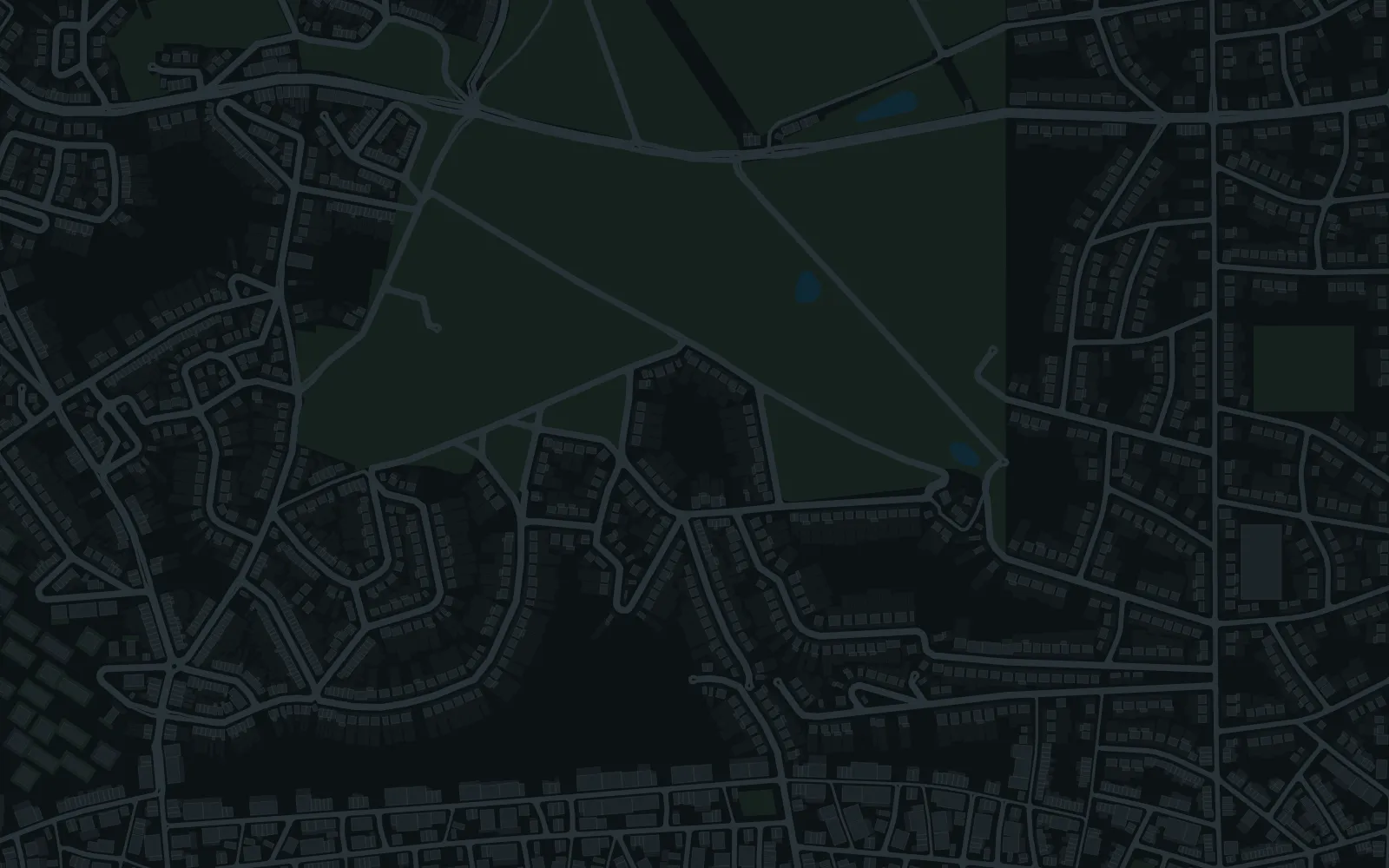
Played at 40× speed
Main roads the game’s planner
- Distance
- 2.4 km
- Lights
- 2
- Give-ways
- 3
- Right turns
- 2
- Humps
- 2
- Time
- 3:57by 0:156:26
The shortcut shortest distance
- Distance
- 2.0 km
- Lights
- 0
- Give-ways
- 4
- Right turns
- 3
- Humps
- 2
- Time
- 4:125:18by 1:08
The main road wins by 15 seconds, despite being 360 metres longer. Now switch the race to rush hour. The lights get slower, the main roads crawl at half the limit, and the shortcut wins by 1 min 08 s. That’s the rat run in one picture: a bad idea at 10 a.m., a good one at 6 p.m.
Race 2: round the back
From Guildford Grove to Walerand Road. The main road goes up Blackheath Road and Blackheath Hill (1.9 km). The shortcut ducks behind it through Crosslet Vale, Coldbath Street, Bennett Grove (1.6 km). It’s 299 m shorter and it skips 2 sets of lights.
Race 2 · Guildford Grove to Walerand Road
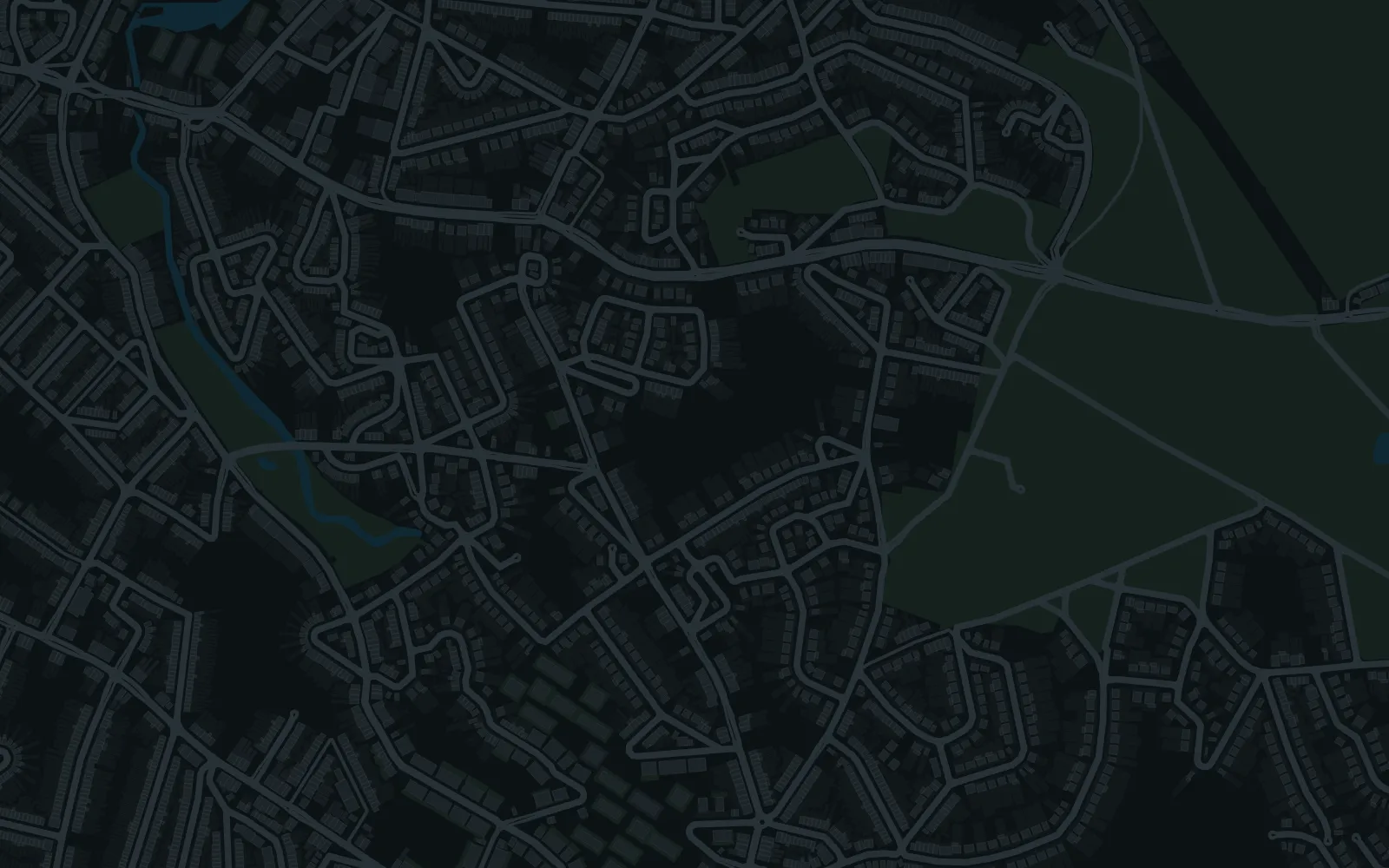
Played at 40× speed
Main roads the game’s planner
- Distance
- 1.9 km
- Lights
- 5
- Give-ways
- 3
- Right turns
- 1
- Humps
- 0
- Time
- 4:02by 0:097:22by 0:19
The shortcut shortest distance
- Distance
- 1.6 km
- Lights
- 3
- Give-ways
- 7
- Right turns
- 6
- Humps
- 0
- Time
- 4:117:41
It loses anyway: by 9 seconds on quiet roads and by 19 seconds at rush hour. The shortcut asks the driver to give way 7 times and turn right 6 times, and at rush hour each of those gets slower too. Shorter, yes. Quicker, no.
Where the time goes
Split each route’s time into what it was spent on and the pattern is plain. The main roads lose their time at the lights. The shortcuts lose theirs at give-ways and turns. Humps barely register.
- Moving
- Lights
- Give-ways
- Turns
- Humps
Race 1 · Wimbledon Park Road to Morden Hill
Main roadsQuiet roads
ShortcutQuiet roads
Main roadsRush hour
ShortcutRush hour
Race 2 · Guildford Grove to Walerand Road
Main roadsQuiet roads
ShortcutQuiet roads
Main roadsRush hour
ShortcutRush hour
Our model, not a measurement: cruise at the speed limit, plus an expected delay at each junction. Quiet roads use the game’s own route-planning delays (lights 8 s, give-way 2 s, left turn 2 s, right turn 5 s). Rush hour is our assumption: lights 30 s, give-way 10 s, right turn 15 s, and A and B roads at half the limit while side streets stay clear.
The rules of the rat run
Neither race is a law of nature: change the junctions, or the traffic, and the answer changes. But the same few things decide every one.
- 01
40 s
Distance is cheap
The first race’s shortcut is 360 m shorter. At 20 mph that’s worth 40 seconds, and a couple of right turns at rush hour can take all of it back.
- 02
8–30 s
Junctions are expensive
Each set of lights costs 8 seconds on average when it’s quiet and 30 at rush hour, in our model. A give-way costs 2 to 10. Time lost at junctions doesn’t care how short the road was.
- 03
340 m
Right turns are the dearest of all
Turning right out of a side street means a gap in two streams of traffic. At rush hour we allow 25 seconds for it: the time it takes to drive 340 m at 30 mph. Rat runs are full of them.
- 04
37 s/km
Side streets are 20 mph
Most residential streets on the map are 20 mph, which costs 37 seconds every kilometre against 30. The humps themselves cost less than you’d think: about 0.5 s each, slowing to 15 mph and back at 1.5 m/s².
- 05
You + everyone
Everyone else knows it too
A shortcut is only quick while it’s quiet. Once sat-navs and regulars find it, its give-ways queue and its one-car-wide gaps start to stall, and it becomes the jam it was avoiding.
Braess’s paradox: when a new road makes everyone slower
Rule five has a famous big brother. In 1968 the mathematician Dietrich Braess showed that adding a road to a network can make every journey on it slower, even though nobody is forced to use the new road.
The textbook version has 4,000 drivers going from Start to End. There are two routes. Each has one road that takes the number of cars on it divided by 100, in minutes, and one road that always takes 45 minutes. Traffic splits evenly, 2,000 each way, and every trip takes 20 + 45 = 65 minutes.
Now open a new road from A to B that takes no time at all. For any one driver, the busy road to A (at most 40 minutes) beats the 45-minute one, and so does the busy road from B. So everyone takes Start, A, B, End. With all 4,000 on both busy roads, each takes 40 minutes: 80 minutes a trip, a quarter of an hour worse for everybody. And nobody can do better by switching back alone, because the old 45-minute roads would now make their trip 85.
4,000 drivers, Start to End
Every trip: 65 minEvery trip: 80 min
2,000 go via A, 2,000 via BAll 4,000 go A, new road, B
Real cities have seen hints of it. When roads close, traffic doesn’t always get worse in the way people expect, and some of it simply disappears. It is a reminder that each driver choosing the quickest route for themselves doesn’t add up to the quickest town.
Why does my sat-nav send me down side streets?
Because, on its numbers, they’re quicker. Navigation apps estimate how long every road will take from live and historical speed data, a lot of it from other drivers’ phones. When the main road slows down, the side streets come out ahead on paper, and the app routes you through them. That is exactly the rush-hour version of race 1.
The catch is that the estimate is only as good as its data. A quiet side street is quick until a lot of people are sent down it at once, and a queue at a give-way can build faster than the app notices. The app is choosing the best route for you, not for the street, which is why many councils have added 20 mph limits, humps and filters that let bikes through but not cars.
The game’s planner has no live traffic at all: it uses the fixed delays above, and it never routes through a filter or a bus gate. Which is why it likes main roads, and why, in a jam, a passenger who knows the back way can beat it.
In the game
That passenger is you. In I Know a Shortcut you can’t steer; you call the turns, and the driver does their best with them. Journeys are scored by time and any route counts, so the shortcut is yours to find. Just remember to count the right turns.
Questions
Quick answers
Do shortcuts through side streets actually save time?
Sometimes. On quiet roads the main road usually wins, because side streets are slower (often 20 mph) and full of give-ways and right turns. When the main road is jammed, the back streets can win by minutes. It depends on the junctions far more than the distance.
What is a rat run?
A route through residential side streets that drivers use to skip a busy main road, usually to avoid lights or a queue. The streets were not built for through traffic, which is why many now have humps, 20 mph limits or filters.
Why does my sat-nav send me down side streets?
Navigation apps estimate journey times from live and historical speed data. When the main road is slow, the side streets can come out quicker on paper, so the app routes you through them. The estimate is only as good as its data, and a queue at a give-way can arrive faster than the app notices.
What is Braess’s paradox?
The finding, by mathematician Dietrich Braess in 1968, that adding a road to a network can make every journey slower. Each driver picks the route that is quickest for them, everyone piles onto the new link, and the whole network settles somewhere worse than before.
In the game
Now try it with someone who doesn’t know the way.
In I Know a Shortcut you’re the passenger. You can’t steer or brake; you can only call it, and your driver does their best. Hilltop Handover runs 1.1 km to Dartmouth Terrace, with 6 turns to call and a gold medal at 5:45.