
Roundabouts
Third exit. Which lane?
Roundabouts are a clock face with rules. Give way to the right, pick your lane by your exit, and signal so everyone knows where you’re leaving. Here is the whole pattern, and why it works.
Every passenger has said it: “Take the third exit.” And every driver has thought, half a second later: which lane is that? Roundabouts are simple once you see the pattern, and baffling until you do. The pattern is a clock face, and the rules for it are in the Highway Code, rules 184 to 190.
Here is how they work, which lane and which signal for each exit, and why the rules are the way they are.
You Already on the roundabout
A junction you go round
A roundabout is a junction where every road meets a one-way ring round a central island. In the UK, where we drive on the left, traffic goes round clockwise, and you always pass the island on your right.
Nobody crosses anyone else’s path head on. You join the flow, go round to your road and peel off. That’s the whole trick.
Give way to the right
As you arrive, give way to traffic coming from your right: the traffic already on the roundabout, about to pass in front of you. Look right, wait for a gap and go.
The dashed double line at the mouth of each entry is a give-way line. Signs, markings or traffic lights can change who goes first, so read them on the way in.
Pick your lane for your exit
Count the exits clockwise from yours. On a normal four-arm roundabout, the left lane serves the first exit and straight ahead; the right lane serves the exits past twelve o’clock and going all the way round.
Lane markings on the approach overrule this, so follow the arrows if they say otherwise.
Why build roundabouts at all?
Count the places where two vehicles’ paths meet. At an ordinary four-way crossroads, with every turn allowed, there are 32: 16 where paths cross, 8 where they merge and 8 where they split. A single-lane roundabout has 8, and none of them is a crossing. Everyone is going the same way round.
32 conflict points
- 16 crossing
- 8 merging
- 8 diverging
8 conflict points
- 0 crossing
- 4 merging
- 4 diverging
Each dot is a place two vehicles’ paths cross, join or split, for single-lane approaches with every movement allowed. Crossing points (the dangerous, side-on kind) drop from 16 to none.
That changes the kind of crash you can have, as well as how many. At a crossroads the worst collisions are side-on, at speed, into a door. On a roundabout the curve makes everyone slow down, and when two cars do touch, it’s usually a glancing blow at a shallow angle. Studies of junctions converted to roundabouts, mostly in the United States, have found injury crashes falling by roughly three-quarters.
Who has priority at a roundabout?
Traffic already on the roundabout, coming from your right. Rule 185 says to give priority to traffic approaching from your right, unless signs, road markings or traffic lights tell you otherwise. Not the traffic on your left, not whoever arrived first, and not the bigger car.
The reason is the direction of flow. Going clockwise, the next car to cross your entry is always the one coming round from your right. Give way to it and the ring keeps moving; give way to the left and you stop for people who aren’t in your way yet.
Some entries have no give-way line, and markings let you join without stopping. Even then, the Highway Code says to look right before you join, to watch for people already on the roundabout who may not be signalling correctly (or at all), and to check that the car in front has actually gone before you pull away.
Which lane for which exit, and when to signal
Rule 186, in three cases, for a normal four-arm roundabout when nothing on the road says otherwise. Pick an exit and watch.
Which lane, which signal
- On approach
- Left lane, signal left
- Going round
- Keep left, keep signalling left
- Leaving
- Still signalling left
First exit
You’re turning off straight away, so the signal tells everyone at once that you won’t cross their path.
- On approach
- Left lane, no signal
- Going round
- Stay in your lane, no signal
- Leaving
- Signal left after exit 1, then move out
Straight ahead
No signal on the way in, because a left signal would say “first exit” and a right one would say “past twelve”. Signal left once you pass the exit before yours.
- On approach
- Right lane, signal right
- Going round
- Keep right, signal right
- Leaving
- Signal left after exit 2, then move out
Third exit (right)
The right lane keeps you inside the cars leaving earlier, so your paths never cross. Signal right to say you’re staying on, then left after the exit before yours.
First exit: left lane, signal left
Approach in the left-hand lane signalling left, keep to the left on the roundabout and keep signalling until you leave. You’re off at the first chance, so everyone can see straight away that you won’t cross their path.
Straight ahead: usually the left lane, no signal on the way in
Pick the right lane for it on approach (on most two-lane entries that’s the left), and you shouldn’t normally need to signal as you arrive. Then signal left once you’ve passed the exit before yours. A signal on the way in would lie: left says you’re taking the first exit, right says you’re going past twelve.
Going right, or past twelve o’clock: right lane, signal right
Signal right and approach in the right-hand lane, keep to the right on the roundabout, then signal left after you’ve passed the exit before the one you want and move out to leave. The right signal says “I’m staying on”, so nobody waiting at the next entry pulls out expecting you to turn off.
Why the right lane? Because it keeps the lanes from crossing. Cars leaving early stay on the outside, cars going further round stay on the inside, and the only time anyone moves out is after the exit before theirs, when the car outside them has already gone.
When the lanes say otherwise
All of this applies “unless signs or markings indicate otherwise”. Many roundabouts have arrows painted on the approach, or lane signs before it, and those win: a busy roundabout might give straight ahead to both lanes, or send the right lane to the second exit. Read the signs early and get in lane before the give-way line. Where an entry has more than three lanes, the Highway Code says to use the most appropriate one on approach and through it.
Spiral roundabouts
Some bigger roundabouts take the decision out of your hands with spiral markings: lane lines that wind outwards from the island to the exits. You choose your lane on the approach from the signs, then simply follow it. The markings move you outwards at the right moment, and your lane becomes the exit lane, so there’s no lane change to make across someone else.
Mini-roundabouts
A mini-roundabout is a white circle painted on the road, sometimes slightly domed, in place of an island. Rule 188 says to approach it exactly as you would a normal roundabout: give way to the right, signal the same way. Every vehicle must pass round the central marking, not over it. The only exception is a large vehicle that physically can’t get round.
There is less room and less time, so signal early and slow down. The Highway Code also says to avoid U-turns at mini-roundabouts, and to watch for other drivers who make them anyway. Where there are two or more mini-roundabouts close together (rules 189 and 190), treat each one separately and give way to the right at each.
Lorries, buses, cyclists and horse riders
Not everyone takes the line in the diagram. Rule 187 warns that long vehicles (and anything towing) may have to take a different course or straddle two lanes, on the way in or on the roundabout, simply because of their length. Watch their signals rather than their position, and don’t sit beside one as it turns.
Cyclists, horse riders and horse-drawn vehicles may stay in the left-hand lane even when they’re going all the way round, signalling right to show they aren’t leaving. Since the 2022 update, the Highway Code says drivers should give priority to cyclists on the roundabout, give them plenty of room, not overtake them within their lane, and take extra care not to cut across them when entering. Watch out for motorcyclists, for people crossing the approach and exit roads, and for anyone straddling lanes or in the wrong one.
Roundabouts with traffic lights
Big, busy roundabouts often have traffic lights on the entries, and sometimes on the ring itself, with stop lines part of the way round. Where there are lights, the lights decide: they replace “give way to the right” for as long as they’re working. Lane choice and signals stay the same, and you may have to stop on the roundabout at a red before carrying on to your exit. Never block the ring by queueing across it.
Quick quiz
Four roundabouts, four questions. Count clockwise.
Which lane, which signal?
0 of 4
1Four arms. You want the first exit, the road to your left. Lane and signal on the way in?
First exit: left lane, left signal, and keep it on until you leave.
2Four arms. You want the exit straight across, at twelve o’clock. Lane and signal on the way in?
Straight ahead: usually the left lane, no signal on approach, then signal left after the exit before yours.
3Four arms. You want the third exit, the road to your right. Lane and signal on the way in?
Past twelve o’clock: right lane, signal right, keep right, and signal left after the second exit.
4Going right, you’ve just passed the second exit. What now?
Once you pass the exit before yours, signal left and move over to leave.
Roundabouts in the game
The town in I Know a Shortcut is made up, loosely based on London, and its roads keep the same rules. When the game builds its map, every roundabout with three or more arms becomes a one-way ring, clockwise, with traffic keeping left at 20 mph, and every entry gives way to the cars already going round. At a mini-roundabout every arm gives way, and turning cars drive round the painted centre rather than over it.
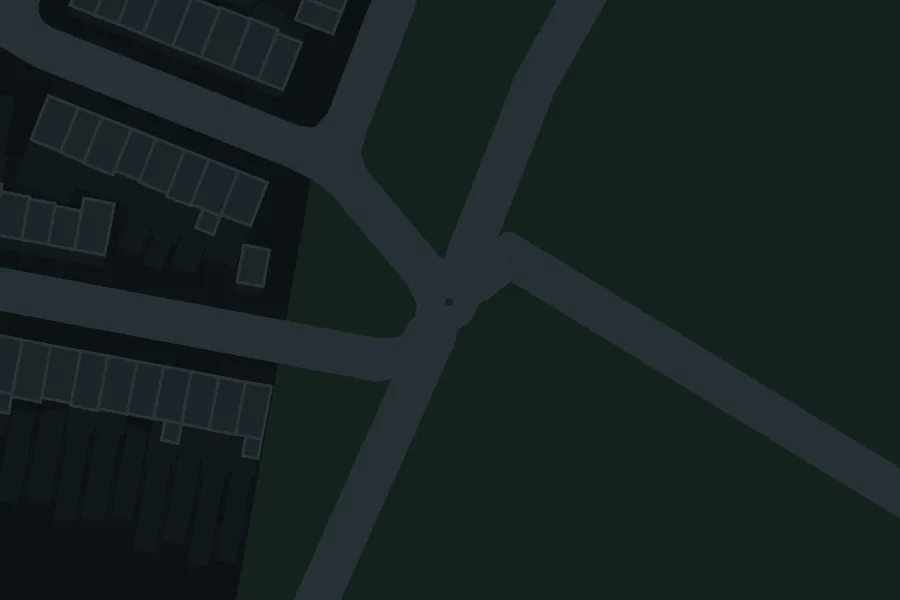
So “third exit” means the same thing to your driver as it does to you. Call it early, because a car on the ring has right of way and your driver will wait for a gap before they go. Heath to Harbour goes over the five-arm mini-roundabout below.

Questions
Quick answers
Who has priority at a roundabout in the UK?
Traffic already on the roundabout, coming from your right. The Highway Code (rule 185) says to give priority to traffic approaching from your right unless signs, road markings or traffic lights say otherwise. Look right as you arrive and wait for a gap.
Which lane do you use for the third exit of a roundabout?
On a normal four-arm roundabout the third exit is to your right, so signal right and approach in the right-hand lane, keep to the right on the roundabout, then signal left after you pass the second exit and move out to leave. Lane markings or signs on the approach override this.
Do you signal when going straight ahead at a roundabout?
Not on the way in: for an exit in between, the Highway Code says you should not normally need to signal on approach. Stay in your lane, usually the left one, and signal left once you have passed the exit before the one you want.
Can you drive over a mini-roundabout?
No. Rule 188 says all vehicles must pass round the central markings, except large vehicles that are physically incapable of doing so. Treat it like a normal roundabout: give way to the right, signal the same way, and avoid U-turns.
Why are roundabouts safer than crossroads?
A four-way crossroads has 32 conflict points where vehicles’ paths cross, merge or split; a single-lane roundabout has 8, and none of them is a crossing. Traffic also has to slow down to go round, so collisions that do happen tend to be slower and at a glancing angle rather than side-on.
In the game
Now try it with someone who doesn’t know the way.
In I Know a Shortcut you’re the passenger. You can’t steer or brake; you can only call it, and your driver does their best. Heath to Harbour runs 3.7 km to Orlop Street riverfront, with 9 turns to call and a gold medal at 15:25.